PDF Download Lincoln in the Bardo: A Novel, by George Saunders
Yet, exactly how is the method to get this e-book Lincoln In The Bardo: A Novel, By George Saunders Still perplexed? It doesn't matter. You could appreciate reviewing this e-book Lincoln In The Bardo: A Novel, By George Saunders by on the internet or soft documents. Just download guide Lincoln In The Bardo: A Novel, By George Saunders in the web link offered to go to. You will certainly get this Lincoln In The Bardo: A Novel, By George Saunders by online. After downloading and install, you can save the soft file in your computer or kitchen appliance. So, it will certainly reduce you to review this book Lincoln In The Bardo: A Novel, By George Saunders in certain time or location. It could be not sure to appreciate reading this e-book Lincoln In The Bardo: A Novel, By George Saunders, due to the fact that you have great deals of work. But, with this soft file, you can delight in checking out in the spare time even in the gaps of your works in office.
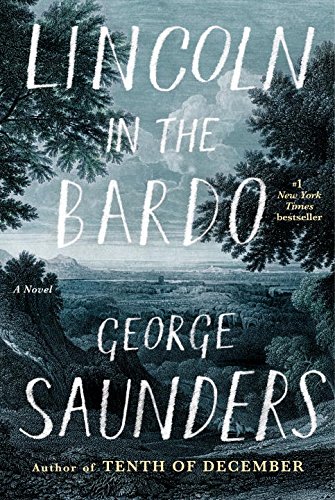
Lincoln in the Bardo: A Novel, by George Saunders

PDF Download Lincoln in the Bardo: A Novel, by George Saunders
Find much more experiences as well as expertise by reading the publication qualified Lincoln In The Bardo: A Novel, By George Saunders This is an e-book that you are looking for, isn't it? That corrects. You have actually involved the best site, then. We consistently give you Lincoln In The Bardo: A Novel, By George Saunders as well as one of the most preferred books on the planet to download and install and enjoyed reading. You may not overlook that seeing this collection is a function or also by unintentional.
This Lincoln In The Bardo: A Novel, By George Saunders is really appropriate for you as newbie visitor. The viewers will certainly constantly begin their reading routine with the preferred theme. They could rule out the author and also publisher that produce guide. This is why, this book Lincoln In The Bardo: A Novel, By George Saunders is actually best to read. Nonetheless, the idea that is given up this book Lincoln In The Bardo: A Novel, By George Saunders will show you lots of points. You can begin to like additionally reviewing until the end of guide Lincoln In The Bardo: A Novel, By George Saunders.
Furthermore, we will share you guide Lincoln In The Bardo: A Novel, By George Saunders in soft data types. It will certainly not disrupt you making heavy of you bag. You need only computer tool or gadget. The web link that we offer in this site is available to click and afterwards download this Lincoln In The Bardo: A Novel, By George Saunders You understand, having soft documents of a book Lincoln In The Bardo: A Novel, By George Saunders to be in your gadget can make reduce the readers. So in this manner, be an excellent viewers currently!
Merely hook up to the web to obtain this book Lincoln In The Bardo: A Novel, By George Saunders This is why we mean you to make use of and also use the industrialized innovation. Reviewing book doesn't indicate to bring the printed Lincoln In The Bardo: A Novel, By George Saunders Created modern technology has actually permitted you to read only the soft file of the book Lincoln In The Bardo: A Novel, By George Saunders It is very same. You might not need to go as well as obtain conventionally in browsing guide Lincoln In The Bardo: A Novel, By George Saunders You may not have enough time to spend, may you? This is why we offer you the best method to obtain guide Lincoln In The Bardo: A Novel, By George Saunders now!
#1 NEW YORK TIMES BESTSELLER • The long-awaited first novel from the author of Tenth of December: a moving and original father-son story featuring none other than Abraham Lincoln, as well as an unforgettable cast of supporting characters, living and dead, historical and invented
February 1862. The Civil War is less than one year old. The fighting has begun in earnest, and the nation has begun to realize it is in for a long, bloody struggle. Meanwhile, President Lincoln’s beloved eleven-year-old son, Willie, lies upstairs in the White House, gravely ill. In a matter of days, despite predictions of a recovery, Willie dies and is laid to rest in a Georgetown cemetery. “My poor boy, he was too good for this earth,” the president says at the time. “God has called him home.” Newspapers report that a grief-stricken Lincoln returns, alone, to the crypt several times to hold his boy’s body.
From that seed of historical truth, George Saunders spins an unforgettable story of familial love and loss that breaks free of its realistic, historical framework into a supernatural realm both hilarious and terrifying. Willie Lincoln finds himself in a strange purgatory where ghosts mingle, gripe, commiserate, quarrel, and enact bizarre acts of penance. Within this transitional state—called, in the Tibetan tradition, the bardo—a monumental struggle erupts over young Willie’s soul.
Lincoln in the Bardo is an astonishing feat of imagination and a bold step forward from one of the most important and influential writers of his generation. Formally daring, generous in spirit, deeply concerned with matters of the heart, it is a testament to fiction’s ability to speak honestly and powerfully to the things that really matter to us. Saunders has invented a thrilling new form that deploys a kaleidoscopic, theatrical panorama of voices to ask a timeless, profound question: How do we live and love when we know that everything we love must end?
Praise for Lincoln in the Bardo
“A luminous feat of generosity and humanism.”—Colson Whitehead, The New York Times Book Review
“A masterpiece.”—Zadie Smith
“Ingenious . . . Saunders—well on his way toward becoming a twenty-first-century Twain—crafts an American patchwork of love and loss, giving shape to our foundational sorrows.”—Vogue
“Saunders is the most humane American writer working today.”—Harper’s Magazine
“The novel beats with a present-day urgency—a nation at war with itself, the unbearable grief of a father who has lost a child, and a howling congregation of ghosts, as divided in death as in life, unwilling to move on.”—Vanity Fair
“A brilliant, Buddhist reimagining of an American story of great loss and great love.”—Elle
“Wildly imaginative”—Marie Claire
“Mesmerizing . . . Dantesque . . . A haunting American ballad.”—Publishers Weekly (starred review)
“Exhilarating . . . Ruthless and relentless in its evocation not only of Lincoln and his quandary, but also of the tenuous existential state shared by all of us.” —Kirkus Reviews (starred review)
“It’s unlike anything you’ve ever read, except that the grotesque humor, pathos, and, ultimately, human kindness at its core mark it as a work that could come only from Saunders.”—The National
- Sales Rank: #264 in Books
- Brand: Random House
- Published on: 2017-02-14
- Released on: 2017-02-14
- Format: Deckle Edge
- Original language: English
- Number of items: 1
- Dimensions: 9.51" h x 1.15" w x 6.50" l, 1.40 pounds
- Binding: Hardcover
- 368 pages
- Random House
Most helpful customer reviews
233 of 243 people found the following review helpful.
Move Over Dante!
By Mary Lins
Before you crack open George Saunders' new (first) novel, "Lincoln in the Bardo", you must empty your mind of what you expect an historical novel to be. Both the structure and the narrative are incredibly non-traditional, somewhat experimental, often disorienting, but ultimately fulfilling. Let me assure you that if you open your mind, you'll not only get used to it, you will enjoy it thoroughly.
That said, I think "Lincoln in the Bardo" would work even better as a stage play, somewhat reminiscent of "Our Town", and in this sense I think an audio recording of the novel, if done well, might be the best way to experience this work.
Bardo is a Tibetan word for the "in-between" or "transitional" state between lives (thank you, Wikipedia). The novel takes place in one night in a cemetery and the story is narrated by hundreds of voices: old and young, men, women, and children, white and black, salve and free. These denizens of Saunders' novel are in a place between life and death. We are told that people stay in this gray area for varying periods of time and that children usually stay there a very short time (this is where it also sounded a lot like Purgatory to me). Do these "beings" know that they are actually dead? They use words like "sick box" for coffin, and "sick-form" for body, "white stone home" for mausoleum, so they seem to be unclear as to their actual state. Through these voices Saunders creates as fascinating (and chilling) a version of the after-life as Dante Alighieri gave us. (There is a particularly interesting and notable discussion among them about free will in the latter part of the novel.)
The basic plot is fictionalized history: Willie, Abraham Lincoln's young son, has died and he is now in the Bardo. Here we meet the many fascinating - and funny! characters who show Willie around, who witness the unusual sight of Lincoln cradling the body of his young son, and who endeavor to help both father and son to find peace. That's as far as I will go with the "plot" of this novel.
One of my favorite things about this unique novel, was how Saunders presented conflicting "news reports". For example, when reporting on the White House gala reception the night Willie is dying, some "witnesses" said there was a full moon, some said there was no moon, some said it was green, some red, others said it was just a sliver. This serves to remind us that recorded history is just as unreliable as our current news reporting. What is the truth? Do we ever know? For the purpose of "Lincoln in the Bardo", we only need to know that the Lincolns did lose their beloved son Willie in early 1862, all else is brilliantly imagined and "reported" by Saunders.
Ultimately "Lincoln in the Bardo" is a riveting exploration of death, grief, and love told in an utterly unique, almost poetic, fashion.
205 of 223 people found the following review helpful.
Saunders doesn't disappoint. This is a must read!
By Mike W.
I almost want to break this review into two parts. One for those who know Saunders and one for those who’ll be experiencing him for the first time. What does it matter? Well, you’re about to hear and read a lot about this book, Lincoln in the Bardo, about Saunders himself (there was so much press with Tenth of December that I feel like he and I have hung out multiple times; that I know all his stories), and about his genius. Then, if you’ve never read him, and especially if you haven’t read much in the way of modern or post-modern literature, you’re going to pick up this book and put it down in about five minutes. That, dear readers, would be a grave (see what I did there?) error, a real tragedy. Why? Because Saunders’ much anticipated first novel really is as genius as the stories and interviews and blurbs are going to claim, but you have to do a little more of the work as a reader than you might be used to.
Much anticipated is the phrase you’ll probably hear most. What that should tell you is that Saunders has a strong fan base. He truly does, and full disclosure here, I’ve counted myself among them for a few years now. His mastery of the short story is well known, with the use of quirky characters, odd theme parks, and surreal science fiction-y, angst inducing situations known to take you to dark, uncomfortable places but that still manage to find and nourish a spark of humanistic hope. Perhaps the most common feeling among his readers as they’ve enjoyed these works is “man, I wish this guy would write a novel!” He has, and in true Saunders fashion, he’s ensured that very little about the experience is “normal”.
I’m not going to regurgitate plot here, plenty of better reviews have already done you that favor. What I do want to make sure to express is the feel of the structure and the experience, perhaps in terms of other things you’ve read and seen. The most common comparison I’ve read is Edgar Lee Masters’ “Spoon River Anthology”. The comparison is apt, there are similarities, mainly in that the dead speak to us of their pasts and especially of their mistakes. But Masters’ dead are much less playful and rarely attempt humor while Saunders’ cast of spirits deliver several laugh out loud moments as they guide readers through the tale. I thought often of Twain as I read.
Another comparison that came to mind several times was Dante’s Inferno. Though instead of a proper hell, we are treated to a description of a Bardo, a purgatory where spirits have remained in between their death and their final destination. Each held up for reasons of their own personal obsessions, several of which are brilliantly and humorously described throughout the novel. Others are devastatingly sad yet delivered equally as powerfully. The reader increasingly learns about the rules and behaviors of that Bardo through these snippets of stories.
This is probably a good time to talk about structure. It’s quite different and again, I’d expect no less from Saunders. Picture a Greek chorus, a paragraph or two of dialog (rarely more) with an attribution after each. It is startling at first and again, will be especially so to readers less familiar with modern and post-modern lit. And so it is this difference that will probably be the biggest complaint as the reviews begin to pile up here. My advice? Hang in there, it works and it works quite well. In fact, you’ll not only get used to it, you’ll learn to love it.
More comparisons now. Lincoln, the titular and in some ways central (though in many ways not) character expresses the most powerful dialog and I often thought of Shakespeare when Lincoln spoke. These are beautiful and profound moments, by far the novel’s most powerful as he reflects on the death of his son Willie. You don’t have to be a parent to feel the impact of his dialog, but it sure didn’t hurt, and I personally haven’t read such raw, sincere and painful cogitation on death and mourning since I read Twain’s “The Death of Jean”. Readers of Paul Hardings’ Enon have also tasted of similar parental agony. In any case, it is through Lincoln’s character that the deepest waters flow.
One other comparative thought, especially if you’re hearing all the publicity and thinking of picking up this novel for grandma who loves to read. It’ll also bring to mind at various times Beavis and Butthead, or maybe Hank and Bobby Hill. I don’t mean that as a negative, I really don’t. But I do understand that this is something about Saunders that people either love or hate. At one moment Lincoln may wax eloquent on the spark of life and in the next, you may be reminded for the tenth time or more that one of the spirits has a massive erection. These moments bring me joy and laughter, but I do comprehend that for some others they don’t carry the proper dignity of their normal read. If you are one such, Saunders may not be for you.
Most importantly, I’d implore all readers to keep an open mind. If you’re a Saunders fan, you’re going to be strengthened in that fandom. If you’re new to Saunders, but enjoy alternative structures and have a history of adventurous reading, I’m confident you’ll soon count yourself a soldier in his army. However, if you’re one whose reading tends toward the traditional, conservative in structure and clear in its identity, then Lincoln in the Bardo’s narrative structure and its moments of revelry may at first feel like nails on a chalkboard to you. Please, fight through it. The novel's main points could yet become for you sweet susurrations of humanistic glory that leave you wet eyed and wondering where Mr. Saunders has been all your life.
63 of 70 people found the following review helpful.
The Journey of Reading, a Journey of Grief
By James Hiller
Sometimes you finish reading a book, wondering what it was that you just experienced; a book so outside the norms of publishing that it is in its own category. Is this what's it is like to read a masterpiece? Is a masterpiece challenging, frustrating, and ultimately, rewarding beyond words? More than a book, this was an experience that nearly defies description. The reviewers had it right: a group of souls in a graveyard where Lincoln temporarily buried his son who died during his presidency linger inexplicably and narrate this story. They explore themes of life and death and meaning in a way that astonishes and astounds. But none moreso much of Saunders portrait of Lincoln; who, as a grieving father, comes alive in such a way unlike in any other book I've read about him. This mourning Lincoln, who sneaks into the graveyard to visit his son's grave, stuns at the completeness of his grief. Lincoln breathes in this story. Yes, there were times where I had no clue what was going on; persevering through those bits provides much reward later on. A masterpiece begs to be reread; that I shall be doing. A masterpiece remains with you forever; that this book shall do.
Lincoln in the Bardo: A Novel, by George Saunders PDF
Lincoln in the Bardo: A Novel, by George Saunders EPub
Lincoln in the Bardo: A Novel, by George Saunders Doc
Lincoln in the Bardo: A Novel, by George Saunders iBooks
Lincoln in the Bardo: A Novel, by George Saunders rtf
Lincoln in the Bardo: A Novel, by George Saunders Mobipocket
Lincoln in the Bardo: A Novel, by George Saunders Kindle

Tidak ada komentar:
Posting Komentar